
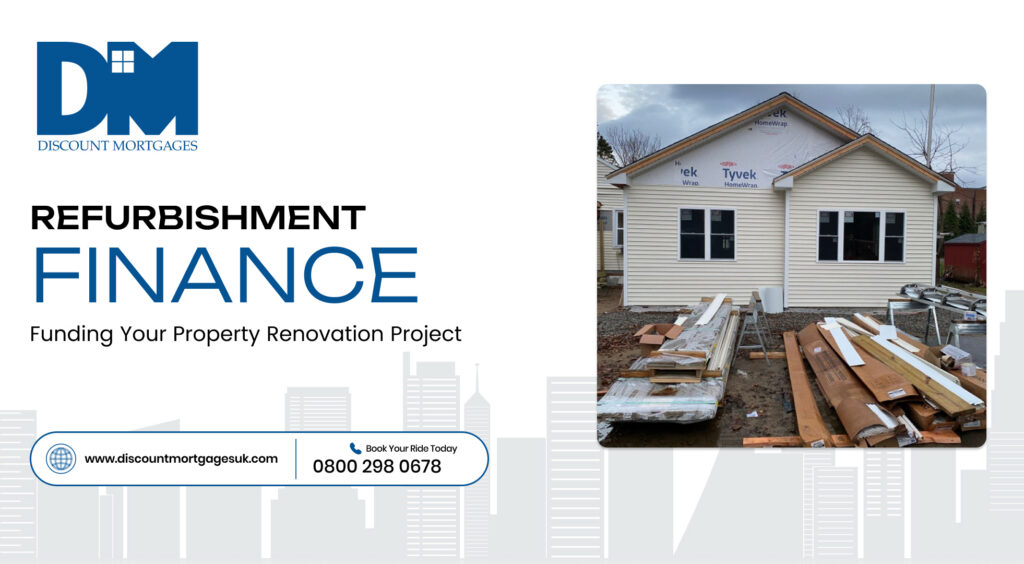
Got a property that needs work proper work, not just a lick of paint but the bank’s already said no? You’re not alone, and you’re not stuck either. Refurbishment finance, arranged through bridging finance, exists precisely for this situation: properties that don’t yet qualify for a standard mortgage but have real potential once the work’s done.
This guide covers how refurbishment finance actually works, how it’s structured, what it costs, and how to walk into your application knowing exactly what a lender will ask you.
The Renovation Funding Problem, in One Sentence
Standard mortgage lenders fund finished, mortgageable homes. Refurbishment projects by definition aren’t finished yet. That gap between “what the property is now” and “what it will be once renovated” is exactly what short term property finance is built to cross.
What Counts as a Refurbishment Project?
Not every renovation needs specialist finance but many do. Broadly, refurbishment finance splits into two categories:
- Light refurbishment cosmetic work: new kitchen, bathroom, flooring, redecoration. The property is already habitable and mortgageable; you’re just improving it.
- Heavy refurbishment structural work: extensions, structural alterations, a property currently lacking a working kitchen or bathroom, or conversions (e.g. splitting a house into flats). These properties are typically unmortgageable in their current state.
The category your project falls into matters a great deal, because it directly affects which bridging lenders will consider it, how funds are released, and what rate you’ll be offered.
How Refurbishment Finance Actually Works
Here’s the mechanic that trips a lot of first-time applicants up: refurbishment finance isn’t usually handed over as one lump sum. Instead, it typically works like this:
- Initial drawdown funds released at completion to cover the purchase (or refinance of a property you already own)
- Staged drawdowns as work progresses and is verified (often via a surveyor or monitoring surveyor), further funds are released to cover the next phase of works
- Final valuation and exit once the work is complete, the property is revalued at its new, improved value, and you exit the bridging loan either by selling or refinancing onto a standard mortgage
This staged structure protects both you and the lender: you’re not paying interest on funds sitting unused, and the lender isn’t releasing capital against work that hasn’t happened yet.
Bridging Finance for Renovation vs Standard Bridging Finance
All refurbishment finance is a form of bridging finance, but not all bridging finance is refurbishment finance. The distinction matters when you’re comparing products:
- Standard bridging loan for house purchase funds released against the property’s current value, typically as a single lump sum, used simply to complete a purchase quickly
- Bridging loan for renovation structured with staged drawdowns tied to work completed, and often assessed against the property’s projected post-works value rather than just its current condition
If your bridging finance broker doesn’t ask about your renovation schedule, scope of works, or contractor arrangements, it’s worth checking they’re quoting the right product for what you actually need.
Open Bridging Loan vs Closed Bridging Loan
Another distinction worth understanding before you apply:
- Closed bridging loan you already have a confirmed, dated exit in place (e.g. a signed mortgage offer waiting to complete, or an exchanged sale)
- Open bridging loan no fixed exit date yet, though you’ll still need to demonstrate a credible exit strategy to the lender
Most renovation projects use open bridging finance initially, since the exact completion date of works can shift then move toward a closed position once refinancing is arranged near the end of the project.
First Charge vs Second Charge Bridging Loans
If you already own the property you’re renovating rather than buying it fresh you may come across this distinction:
- First charge bridging loan the bridging lender holds the primary legal charge over the property (used when there’s no existing mortgage, or the bridging loan replaces it)
- Second charge bridging loan sits behind an existing mortgage or loan already secured against the property, letting you release additional funds for refurbishment without disturbing your current mortgage
Second charge options are particularly useful for homeowners or landlords who want to fund renovation work without remortgaging their existing, competitively priced mortgage.
Loan to Value (LTV) on Refurbishment Projects
Loan to Value (LTV) on refurbishment finance works a little differently to standard bridging:
- Many lenders will fund up to 75% of the property’s current value
- Some specialist products offer high LTV bridging finance based on the projected Gross Development Value (GDV) the property’s value once work is complete allowing you to borrow more against future value, particularly useful for heavy refurbishment projects
- The specific split between purchase funding and works funding varies significantly by lender, so this is genuinely an area where shopping around through a broker pays off
How Much Does Refurbishment Finance Cost?
Costs follow a similar structure to standard bridging finance, though heavier projects can carry a slightly higher rate given the increased risk to the lender:
- Monthly interest commonly 0.55%–1.25%, often rolled up and paid at the end rather than monthly
- Arrangement fee typically 1–2% of the facility
- Valuation fees including any monitoring surveyor fees for staged drawdowns
- Legal fees yours and the lender’s
- Exit fee not universal, but worth checking upfront
A bridging finance broker who specialises in refurbishment products can meaningfully affect your total cost, since not every bridging lender prices staged-drawdown facilities the same way.
Regulated vs Unregulated: Which Applies to Your Renovation?
- Regulated bridging loans apply where the loan is secured against a property you or an immediate family member lives in, or intends to live in
- Unregulated bridging loans apply to investment properties, buy-to-lets, and properties purchased purely to renovate and sell or let
Most property investors and landlords renovating a rental or flip property will fall under unregulated bridging finance but always have this confirmed formally, since it affects the protections and process involved.
Bridge to Let: Renovate Now, Mortgage Later
Bridge to let is one of the most common exit routes for renovation projects. The sequence looks like this:
- Purchase (or refinance) the unmortgageable property using bridging finance
- Complete the refurbishment using staged drawdowns
- Once habitable and mortgageable again, refinance onto a standard buy-to-let mortgage
- Let the property, generating ongoing rental income
This route lets investors access properties mainstream lenders would never touch at purchase stage, then bring them fully into the standard mortgage market once the hard work is done.
Who Can Apply for Refurbishment Finance?
Eligibility is broader than most people assume:
- Individual homeowners renovating their own property
- Property investors and landlords refurbishing to let
- Developers taking on conversion projects
- Limited companies and SPVs
- Applicants with bad credit since lending is largely asset-based, some lenders will still consider you if the property and exit strategy are sound
Refurbishment Finance for Auctions
Auction purchases and renovation projects go hand in hand more often than not many auction lots are exactly the kind of tired, unmortgageable property this type of finance exists for. Given the standard 28-day auction completion deadline, auction finance through a specialist bridging lender is often the only realistic route to completing on time, with refurbishment funding arranged to follow on immediately after.
Choosing the Right Refurbishment Finance Lender
Not every bridging lender offers staged drawdown facilities, and not every broker understands the nuance between light and heavy refurbishment products. Before committing, it’s worth confirming:
- Whether the lender funds against current value, GDV, or both
- How drawdowns are released and verified
- Whether a monitoring surveyor is required, and who pays for it
- What the realistic total cost looks like across the full project timeline, not just the headline rate
FAQs: Refurbishment and Bridging Finance
What is bridging finance? Bridging finance is short-term, property-secured lending used to “bridge” a gap such as between buying a property and completing renovation work, or between purchase and refinancing onto a standard mortgage.
How long does a bridging loan take? Many lenders can release initial funds within 5–14 days, and some same day bridging finance options exist for urgent, well-documented cases. Staged refurbishment drawdowns are then released as work progresses.
Who can apply for bridging finance? Homeowners, landlords, property investors, developers, and limited companies can all apply. Lenders focus primarily on the property’s value, the scope of works, and your exit strategy.
Can I get bridging finance with bad credit? Often yes. Because lending is asset-based rather than purely income-based, many bridging lenders will still consider applicants with a poor credit history if the property and exit strategy are strong.
What is the maximum LTV for a bridging loan? Typically up to 75% of current value, though some specialist refurbishment products lend against projected post-works value (GDV), allowing higher effective borrowing for well-planned projects.
How much does bridging finance cost? Expect monthly interest broadly in the range of 0.55%–1.25%, plus arrangement, valuation, and legal fees. Total cost depends on loan size, project scope, and lender.
Is bridging finance regulated? Only when secured against a property that is, or will be, your own home. Investment and buy-to-let refurbishment projects are typically arranged as unregulated bridging loans.
When should I use a bridging loan? When a property needs work that makes it currently unmortgageable, when you’re racing an auction deadline, or when you need funding released in stages to match a renovation timeline that a standard mortgage simply can’t accommodate.
Final Thought
Refurbishment finance exists for exactly the properties standard lenders walk away from the ones with real potential once the work’s done. With the right structure, staged drawdowns, and a clear exit strategy, that unmortgageable renovation project can become your next completed, income-generating asset.
If you’re planning a renovation and want to understand what’s realistically fundable, Discount Mortgages can search the market for suitable bridging and refurbishment finance options and talk you through your exit strategy before you commit to anything.
Bridging finance is subject to status, valuation, lender criteria and affordability checks. Your home, property, or security may be repossessed if you do not keep up repayments on a loan or mortgage secured against it. Commercial mortgages, including bridging finance and buy-to-let mortgages, are not regulated by the Financial Conduct Authority.